CUSTOM TECHNOLOGY CONSULTANTS
YOUR LOCAL IT ENGINEER | VETERAN VOICE | CYBERSECURITY | STRATEGY
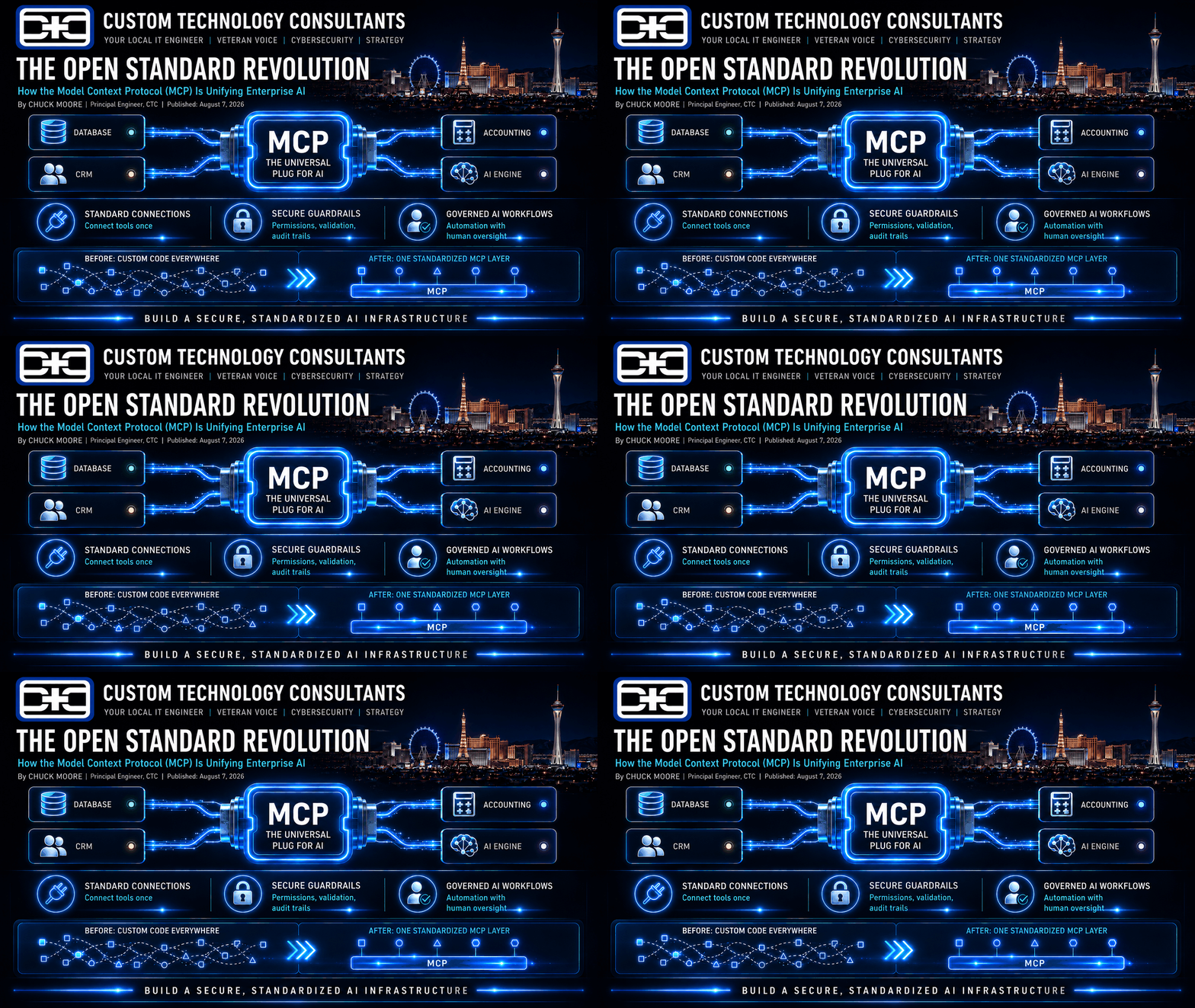
THE OPEN STANDARD REVOLUTION: How the Model Context Protocol (MCP) Is Unifying Enterprise AI
By CHUCK MOORE | Principal Engineer, CTC Published: August 7, 2026
LAS VEGAS, NV — Over the past three years, businesses across Southern Nevada rushed to adopt artificial intelligence. But as companies added AI tools to their daily operations, they ran into a major technical headache: connecting AI to existing company software was slow, expensive, and messy.
If a company wanted an AI assistant to check inventory in a database, pull customer details from a CRM, and draft a financial report in accounting software, engineers had to write custom, fragile code integrations for every single system.
That fragmentation is finally coming to an end thanks to a massive shift sweeping the technology world: the widespread enterprise adoption of MCP (Model Context Protocol).
Designed to act as a universal plug for software systems, MCP is giving growing businesses a clean, standardized way to connect AI tools to their internal databases securely—without writing custom code from scratch.
1. What Is MCP? (The USB Cable for AI)
To understand MCP, think back to how computer peripherals worked twenty years ago. Every mouse, printer, and keyboard required a different cable, port, and software driver. Then came the USB cable, allowing any device to plug into any computer instantly.
MCP does the exact same thing for artificial intelligence:
  Before MCP (Fragile Custom Integrations):
  [ AI Engine ] ──> Custom Code A ──> Database
  [ AI Engine ] ──> Custom Code B ──> CRM Software       ❌ Slow & Easy to Break
  [ AI Engine ] ──> Custom Code C ──> Accounting Tools

  With MCP (The Universal Standard):
  [ AI Engine ] ──( Universal MCP Plug )──> [ Secured Company Data Hub ] ✅ Fast & Standardized
- Universal Connection: MCP gives AI engines a standard language to read company files, query internal databases, and trigger software tasks safely.
- Plug-and-Play Efficiency: Instead of building custom connections for every new software tool, businesses plug their systems into the MCP standard once.
2. Protecting Company Data with Hardware-Level Guardrails
The biggest worry for business owners adopting AI is data security. Nobody wants an automated software tool accessing sensitive payroll records or leaking private customer files.
MCP solves this problem by creating strict, enforced boundaries between your AI tools and your confidential business records:
- Strict Permission Locks: MCP servers restrict what data an AI tool can see, ensuring it only accesses the specific files required for the task.
- Type-Safe Validation: Before an AI tool can run a command or update a record, the MCP layer verifies the input to ensure no bad data enters your systems.
- Complete Audit Trails: Every request made by an AI tool through an MCP connection is logged, giving executive leadership full visibility into automated workflows.
3. The Executive Implementation Roadmap
Adopting open technical standards like MCP allows growing companies to automate tedious tasks while maintaining total control over their data architecture:
1
Identify Core Data Sources
Phase 1: Architecture Review
Audit internal software platforms—such as CRMs, inventory tracking, and financial software—to determine where automated data access adds immediate operational value.
2
Establish Standardized Guardrails
Phase 2: MCP Deployment
Deploy secure MCP connectors around your internal databases, enforcing strict user permissions and encryption standards.
3
Deploy AI Workflow Agents
Phase 3: Governed Execution
Connect enterprise AI engines to your MCP hub, allowing staff to run automated workflows while keeping human approval gates on critical business decisions.
Strategic Leadership Options Compared
| Executive Capability | Trial-and-Error AI Setup | Full-Time CTO Hire | Fractional CTO Partner (CTC) |
|---|---|---|---|
| Annual Payroll Cost | High risk of custom code bugs | $350,000 – $500,000+ salary | Flexible, predictable retainer |
| Data Standard Alignment | ❌ Fragmented custom code | ✅ High internal strategy | ✅ Bespoke MCP architecture |
| Cyber-Insurance Security | ⚠️ High risk of data leaks | ✅ Complete oversight | ✅ Military-grade zero-trust policies |
| Deployment Speed | Months of custom building | 6–9 months recruitment search | Immediate operational execution |
The Trust Factor: Elite Systems Strategy Engineered for Growth
At Custom Technology Consultants, we translate complex technical shifts into clear, straightforward solutions designed to grow your profit margins.
With regional offices in Las Vegas, NV and Clearwater, FL, our veteran-led engineering team serves as your dedicated Fractional CTO partner. Drawing on over 40 years of combined IT engineering experience, we eliminate software waste, lock down private corporate records, and ensure your technology investments deliver maximum return.
BUILD A SECURE, STANDARDIZED AI INFRASTRUCTURE: Take total control of your commercial technology systems today with clear, expert technical leadership on your team.
Contact Custom Technology Consultants right now to schedule your FREE 2026 Strategic Architecture & Technology Assessment.
📞 Call or Text Today: 702-209-0252
📧 Email: [email protected]
🌐 Web: www.getcustomtech.com
EDITOR’S NOTES & SOURCES
- The Strategic Advantage: CTC brings military precision and plain-English technical leadership to give growing mid-market companies elite Fractional CTO strategy without full-time executive payroll.
- The Standardizing Advantage: Industry benchmarks confirm that adopting standardized protocol architectures reduces custom software maintenance costs by up to 40% while accelerating system integration timelines.
- Zero-Trust Security Integration: All CTC technical assessments enforce strict data governance to ensure enterprise data pipelines fully satisfy modern cyber-insurance and federal privacy underwriting requirements.