CUSTOM TECHNOLOGY CONSULTANTS
YOUR LOCAL IT ENGINEER | VETERAN VOICE | CYBERSECURITY | STRATEGY
MEET THE HIGH SCHOOL STUDENT WHO BUILT A ROBOT TURTLE TO SAVE THE OCEAN!
By CHUCK MOORE | Principal Engineer, CTC Published: July 27, 2026
LAS VEGAS, NV — Imagine going camping with your family, looking down into a clear lake, and watching a snapping turtle glide smoothly through the water. Most people would just say, “Cool turtle!” and keep walking.
But a 16-year-old student named Evan Budz had a totally different idea. He asked himself: “What if I built a robot that swims just like that turtle to clean up our water?”
Fast forward through nearly 4,000 hours of hard work in his workshop, and Evan actually did it! He built a swimming AI Robot Turtle that glides through lakes and oceans to hunt down invisible plastic trash that hurts fish and wild animals.
His amazing invention was so good that he won a massive $50,000 prize at a big global science fair!
1. Why Make it Look Like a Turtle?
Engineers build underwater machines all the time, but they usually look like big, noisy metal submarines. So why did Evan choose a turtle?
- Super Swimming Energy: Real turtles are master swimmers. Their shell and flippers let them zoom through the water for miles without getting tired. Evan’s robot uses that same design to stay underwater for a long time.
- Animal Friendly: Big underwater engines make loud buzzing noises that scare away fish. Because this robot looks and moves like a real turtle, ocean animals aren’t scared of it at all!
- Extra Shell Space: A turtle’s big shell gives the robot plenty of room to hide smart computers, cameras, and batteries inside.
2. How Does the Robot “Brain” Find Trash?
The scariest pollution in our lakes is stuff called microplastics—tiny bits of broken plastic that are smaller than a single grain of rice! Human eyes can barely see them, but fish accidentally eat them, which makes them sick.
Evan gave his robot turtle a special computer “brain” powered by Artificial Intelligence (AI) and a 3D laser camera:
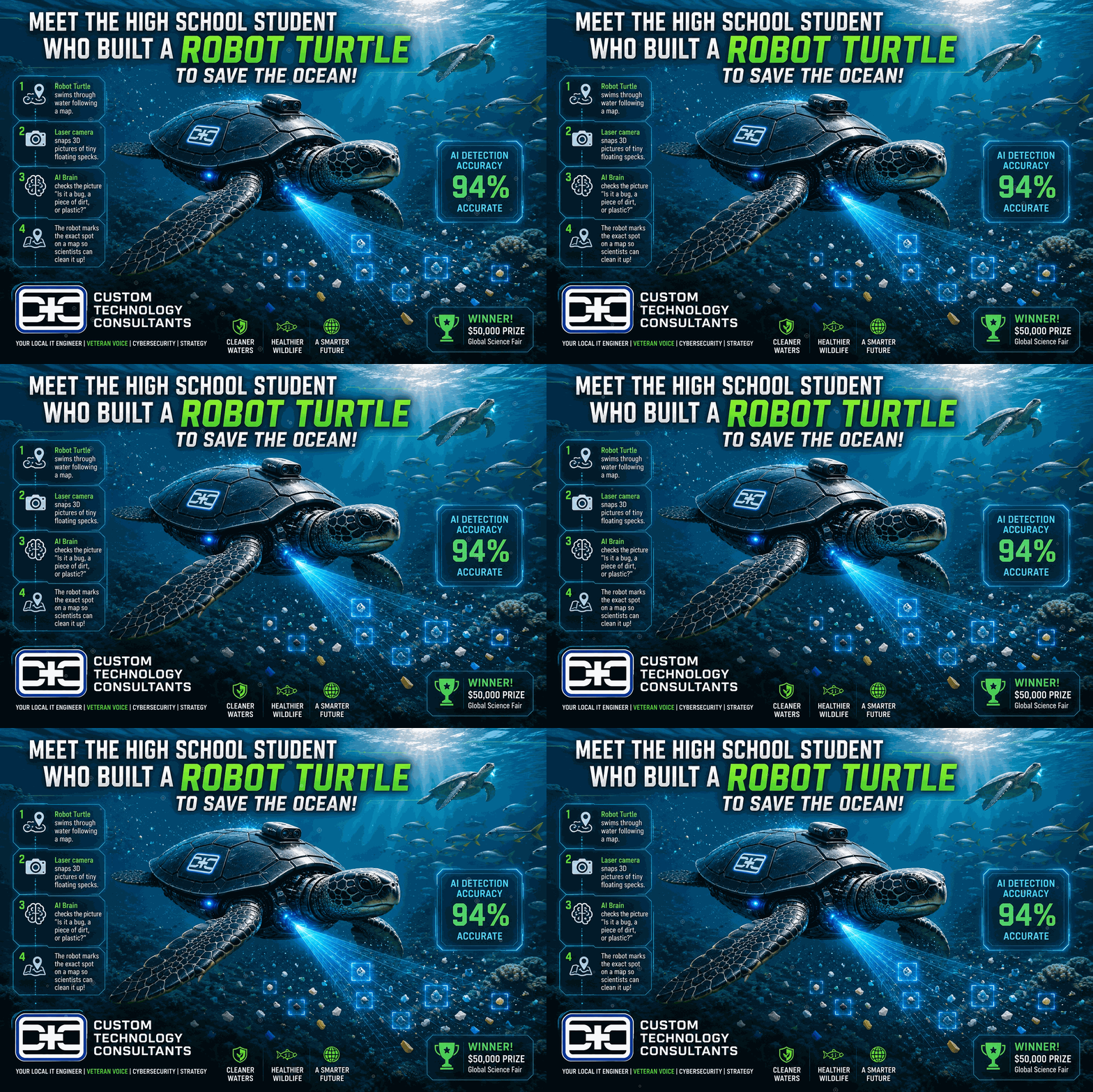
  Step 1: Robot Turtle swims through water following a map.
  Step 2: Laser camera snaps 3D pictures of tiny floating specks.
  Step 3: AI Brain checks the picture -> "Is it a bug, a piece of dirt, or plastic?"
  Step 4: The robot marks the exact spot on a map so scientists can clean it up!
The robot’s AI brain is so smart that it guesses right 94 times out of 100!
3. How You Can Be an Inventor, Too
You don’t need a huge budget or a giant laboratory to build cool things that help the planet. Evan started his project just by being curious on a family trip, watching nature, and learning how to code on his computer.
1
Find a Problem in Nature
Look Around
Notice things around you! Is there trash in the park? Are your toys messy? Great inventions start by fixing everyday problems.
2
Use Biomimicry (Copying Nature)
Copy Nature
Nature is the smartest builder on Earth. Birds inspire airplanes, fish inspire submarines, and snapping turtles inspire water-cleaning robots!
3
Don’t Give Up When Code Breaks
Keep Trying
Evan spent 4,000 hours building his robot. Making mistakes is just part of learning how to build something awesome!
The Trust Factor: Helping the Next Generation of Builders
At Custom Technology Consultants, we love seeing smart technology used to make the world safer, cleaner, and faster. Whether it’s helping a business protect its files or helping schools teach kids about computer science, we build technology systems that are strong, safe, and built to last.
READY TO BUILD SOMETHING AWESOME? Talk to your parents and teachers about learning how to code, build robots, and use computer science safely!
📞 Call or Text Today: 702-209-0252 📧 Email: [email protected] 🌐 Web: www.getcustomtech.com
EDITOR’S NOTES & SOURCES
- The Inspiration: Evan Budz, a 16-year-old high school student from Canada, created this robot after seeing a snapping turtle on a camping trip.
- The Science Award: His project won the Gordon E. Moore Award at the 2026 Regeneron International Science and Engineering Fair.
- Fun Fact: The robot turtle uses light lasers to take 3D pictures underwater instead of normal photographs!